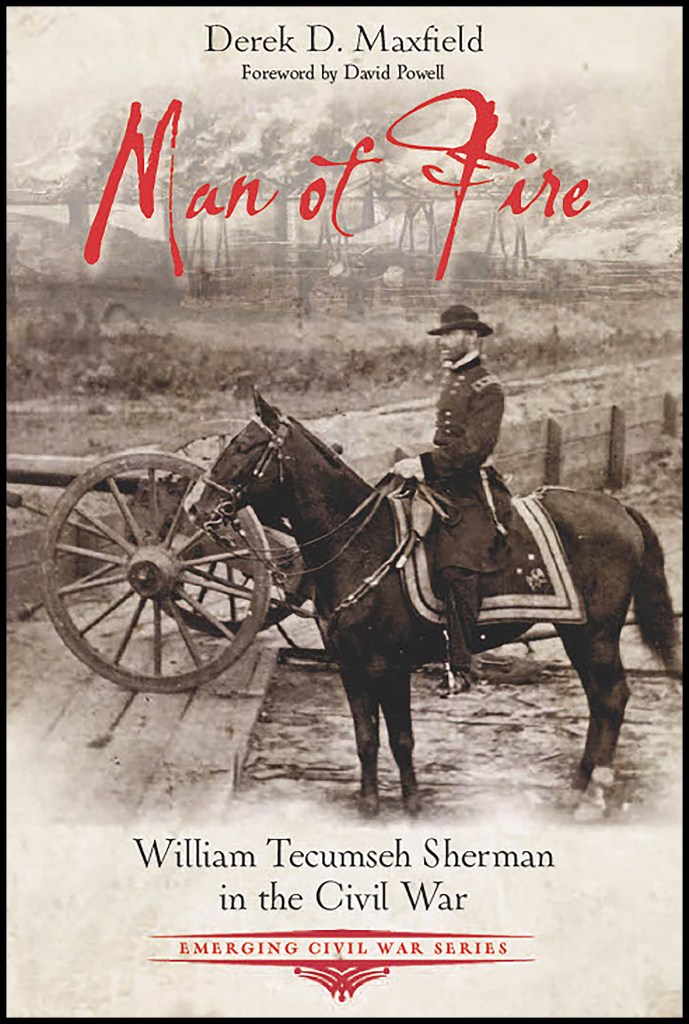
Man of Fire
William Tecumseh Sherman in the Civil War
He has been accused of “studied and ingenious cruelty.” By turns he has been called a savior and a barbarian, a hero and a villain, a genius and a madman. But whatever you call William Tecumseh Sherman, you must admit he is utterly fascinating.
Forging an identity in the fire of war, the unconventional general kindled a friendship with Ulysses S. Grant and proved to everyone at Shiloh, Vicksburg, Chattanooga, Georgia, and in the Carolinas that while he was unorthodox, he was also brilliant and creative. More than that, he was eminently successful and played an important role in Union victory.
Man of Fire: William Tecumseh Sherman in the Civil War tells the story of a man who found himself in war—and that, in turn, secured him a place in history. Condemned for his barbarousness or hailed for his heroics, the life of this peculiar general is nonetheless compelling—and thoroughly American.
Hellmira
The Union’s Most Infamous Civil War Prison Camp – Elmira, NY
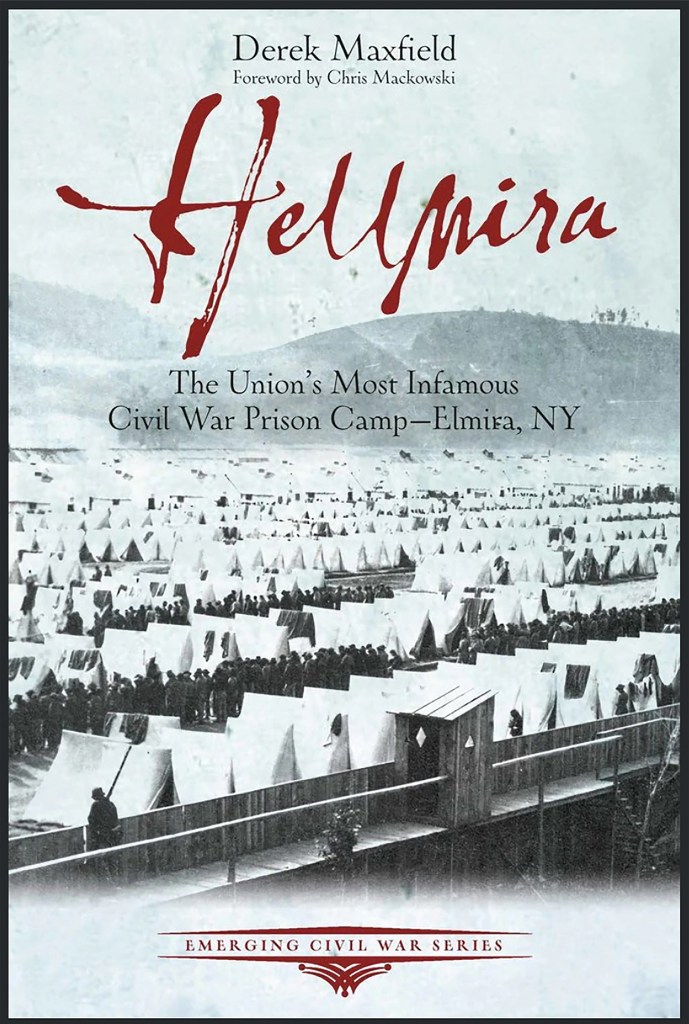
Long called by some the “Andersonville of the North,” the prisoner of war camp in Elmira, New York, is remembered as the most notorious of all Union-run POW camps. It existed for only a year—from the summer of 1864 to July 1865—but in that time, and for long after, it became darkly emblematic of man’s inhumanity to man.
Confederate prisoners called it “Hellmira.”
In Hellmira: The Union’s Most Infamous Civil War Prison Camp – Elmira, NY, Derek Maxfield contextualizes the rise of prison camps during the Civil War, explores the failed exchange of prisoners, and tells the tale of the creation and evolution of the prison camp in Elmira. In the end, Maxfield suggests that it is time to move on from the blame game and see prisoner of war camps—North and South—as a great humanitarian failure.
 Derek D. Maxfield